
What discipleship looks like in a world that’s never heard of Jesus.
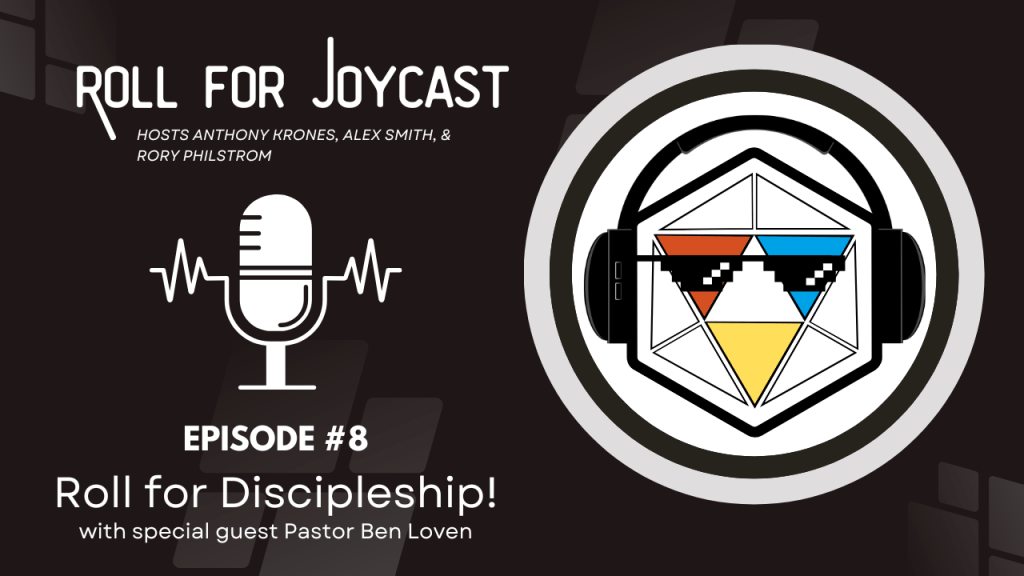
There’s a moment in our recent conversation with Pastor Ben Loven that’s sticking with me. Ben runs an actual play podcast called The Lore of Jesus: Roll for Discipleship, where a table of church council members gets pulled through a portal into a fantasy world. It’s a good premise on its own. But then Ben told us about the gods of that world, and I had to stop and ask him to repeat himself.
There’s no God in this world, he said. Not really. There are what he calls “essences” — supernatural beings tied to fire, water, earth, and air, the classic elementals you’d expect. But there’s a fifth one. An essence of flavor.
Her name is Umami.
I laughed when I heard it, and I still laugh when I think about it. But underneath the joke is a genuinely serious piece of worldbuilding, because Ben had to answer a real question before he could run a single session: what does it mean to have faith, or not have it, in a world where the word “worship” doesn’t mean anything to anybody? Not “worship of a false god” — worship as a category doesn’t exist. Nobody there has ever needed it.
Into that world, Ben dropped four Christians. His players are real pastors and deacons, playing church council members who get swept into a place where the concepts they’ve built their whole vocations around simply are not available to them. They can’t preach. They can’t invoke. They can’t even easily explain what they mean when they say the word “God,” because their scene partners have no shelf to put it on.
And here’s the detail that got me: across an entire season, a whole campaign’s worth of episodes, the characters said the name “Jesus” out loud only twice.
Twice.
If you had asked a person on the street to guess how a group of pastors would run a game about discipleship, they might have guessed something more didactic — arcs built around prayer or evangelism — deliberate lessons wearing a fantasy costume. Ben told me he actually had to think about it for a long time. I mean, nobody wants to sit through an arc that is secretly a sermon about spending time in nature. It’s not a story. It’s not play. It’s a chore with dice attached.
So instead he let the characters just experience situations in the world, asking questions because they didn’t know anything and needed to. Arguing with each other the way people on a council actually argue. Grieving, eventually, in an episode nobody planned, that built on itself until it became the emotional center of the whole season — an episode so heavy that Ben told us he ate an entire sleeve of Oreos afterward just to come back down.
And through all of that — the arguing, the grieving, the not-naming — Ben said something happened that he hadn’t fully expected, even though it was the whole point. The people of that fantasy world had an encounter with Jesus anyway. Not because anyone told them about him. But rather because four Christians were simply being Christian in front of them, in the only way available: through how they treated each other, how they carried their grief, how they kept trying to do right by strangers in a world that owed them nothing.
That’s the piece I keep circling back to. We tend to treat discipleship as something that has to be named to be real — a testimony given, a verse quoted, a name spoken aloud so the record shows the credit went where it belonged. But Ben’s table stumbled into something older and maybe truer: that a life shaped by Jesus can be Christ for people who have never heard the name and, in this case, believe in a supernatural being of savory broth instead.
I don’t think that makes God’s name unimportant. Ben still holds it carefully — the podcast is called The Lore of Jesus, after all. But as they travel in a world where the lore of Jesus is a story nobody knows, the actions of the players suggest that discipleship is less about the vocabulary we manage to deploy and more about the shape we let get pressed into us, the shape that shows up in a room whether we announce it or not.
Season two of The Lore of Jesus: Roll for Discipleship is out now, with a whole new council of characters walking back into that same weird world. Find it wherever you get your podcasts.
Roll for Joy exists to help the faithful and the curious find holy wholeness through the playful, narrative, surprising work of tabletop games. If you want to wrestle with questions like this one around an actual table, check out our local Adventurers’ League games or our annual Holy Rollers retreat. Holy Rollers 2026, “Back to the Cradle,” is coming this August. Use code JOYCAST when you register.



Leave a Reply