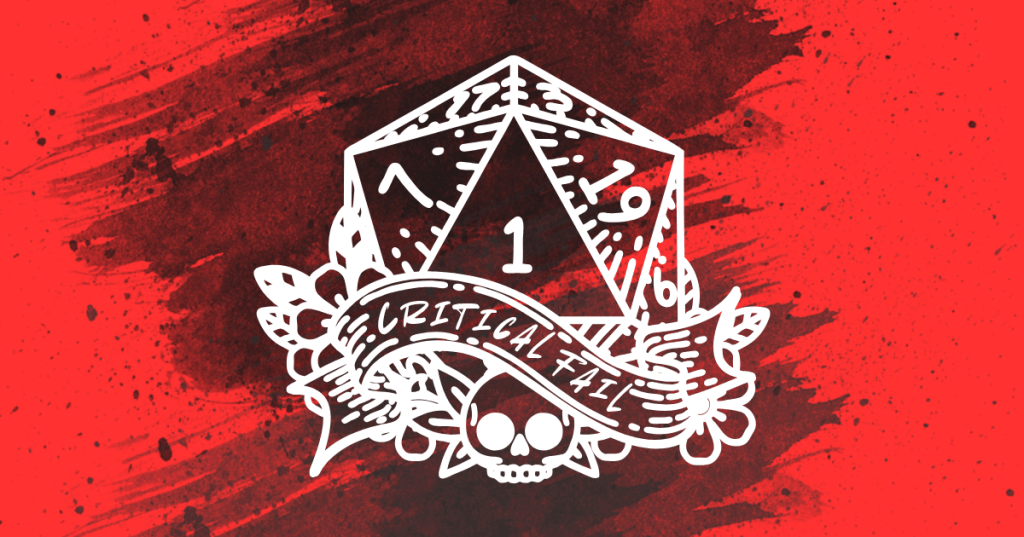
Nobody wants to roll a one.
The dice hits the table wrong, bounces, shows you its lowest face, and something in your chest deflates a little. You missed. You fumbled. The spell fizzled. The horse ran the wrong way. The NPC’s face hardens instead of softens. Something you were sure about turned out to be wrong.
And here is the thing nobody tells you at the beginning: that moment of “Oh no!” is where the best stories live.
This is not intuitive. We come to games to win. We want to solve the puzzle, slay the creature, speak the perfect persuasive word. Failure reads as a malfunction. Something that interrupted the fun.
But stories don’t work that way. They never have. The great ones, the ones we tell around fires, the ones we pass down through centuries, the ones we write into sacred texts… these are not stories of smooth, uninterrupted triumph. They are stories of descent and return. Suffering and endurance. Death and the resurrection.
What makes a story a story is that something breaks.
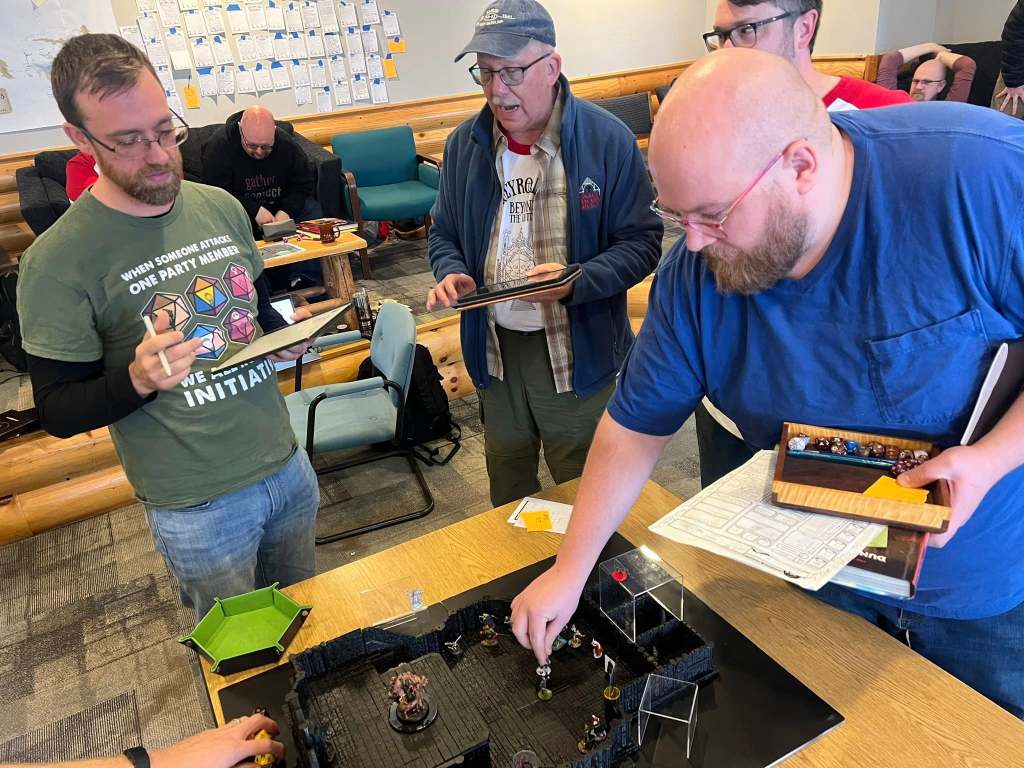
In our latest podcast, Alex told a story from our 2024 Holy Rollers retreat about an encounter with an angel — not the comfortable, greeting-card kind, but the dangerous, ambiguous kind. They were chaotic. Unknowable. The kind that could go either way. The players gathered around this being and tried everything. They reasoned with it. They appealed to it. They reached toward its better nature with everything they had. And then they rolled.
A natural one.
The Angel of Forgiveness became the Angel of the Hardened Heart. In an instant, the being they had been trying to redeem became one of the most powerful enemies on the board. The door that had been open (maybe only a crack, but open!) suddenly slammed shut.
The table went quiet for a moment. And then they carried on.
This is what playing your failures means. It’s not about seeking catastrophe. It’s not about enjoying pain for its own sake. This isn’t masochism. It’s about being willing to let the dice tell you something, and then leaning into what they tell you rather than retreating into what you had planned. If the dice want to tell a story, let them tell it. Because sometimes the story the dice are telling is one we know from somewhere deeper than a game: not every relationship we try to heal will be healed. Not every hardened heart will soften. Not every hand we extend will be taken.
There is a long tradition in Christian spirituality, and in honest human experience, of sitting with that. Of doing the right thing and not receiving the outcome you hoped for. Of reaching toward reconciliation and finding the door shut anyway. The tradition doesn’t tell us that effort guarantees outcome. It tells us something harder and truer: that faithfulness is not the same as success, and that carrying on after a closed door is its own kind of courage.
The players at that table didn’t get the redemption arc they were building toward. They got a powerful enemy and a lesson they’ll carry into every encounter after: sometimes the outcome is not yours to control. What’s yours is the reaching. The trying. The refusal to stop caring just because caring didn’t fix it this time.
As a player, this looks like asking, “If my character just failed spectacularly, what does that reveal about who they are?” The character who misses the shot might be rattled, and they might rattle differently depending on whether they’re proud or humble, steady or fragile. The failure is a gift if you use it to go deeper into who the character is. If your character just failed at something that mattered, what do they do next? What does it look like when they don’t quit? Do they pretend it didn’t hurt, or do they feel the failure deeply but choose to take the next step anyway, because it’s in that next step that they move in the direction of who they want to be?
As a DM, this looks like honoring the roll and asking, “What does the world do when the party fails?” I’m not talking about gloating or punishing the players, but genuinely asking what consequences flow naturally and interestingly from this moment. A world that only responds to success isn’t a world. It’s a trophy case. At a trusting table, the DM need not soften the consequences to protect the players from grief, but instead can trust that a table of people who care about each other can hold a real loss and find something true in it.
And if we want to take this theological for a moment, there is something in the Nat 1 that every person of faith eventually has to reckon with. It’s the prayer that wasn’t answered the way we hoped. It’s the conversation that didn’t go the way we planned. It’s the door that shut instead of opened. There is a long tradition in Christian spirituality of finding something sacred inside suffering. Paul writes to the Romans that suffering produces endurance, and endurance produces character, and character produces hope. There is something forged in the fire that could not have been made anywhere else.
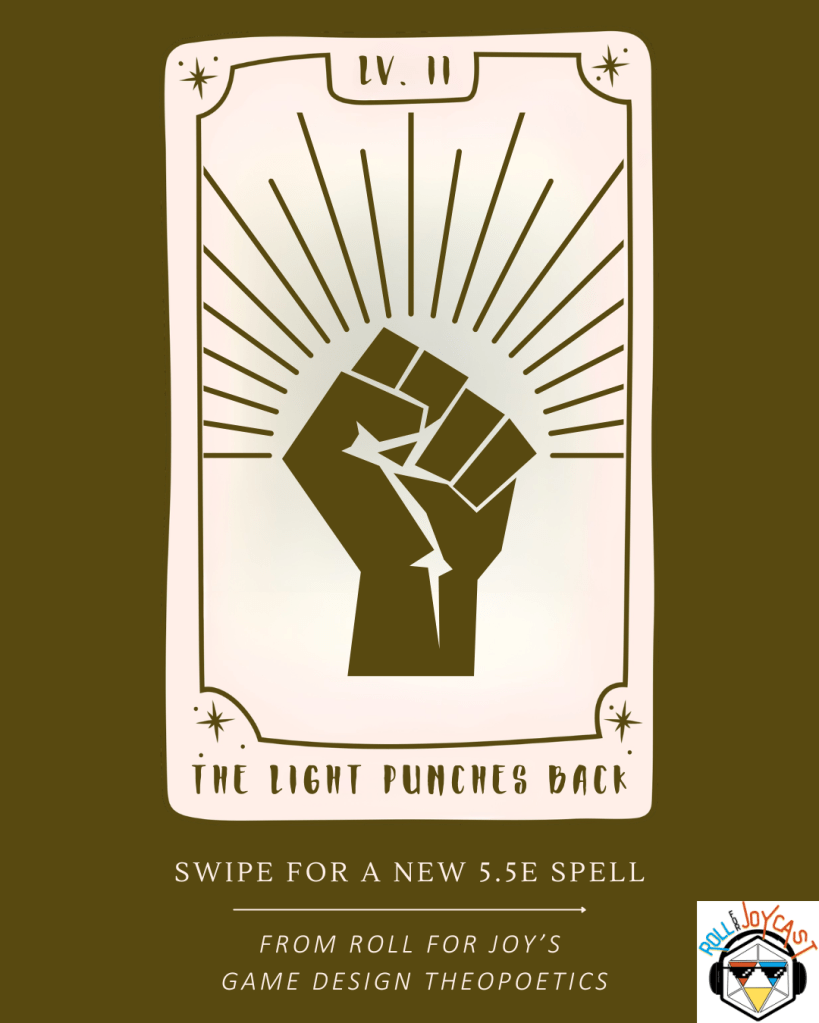
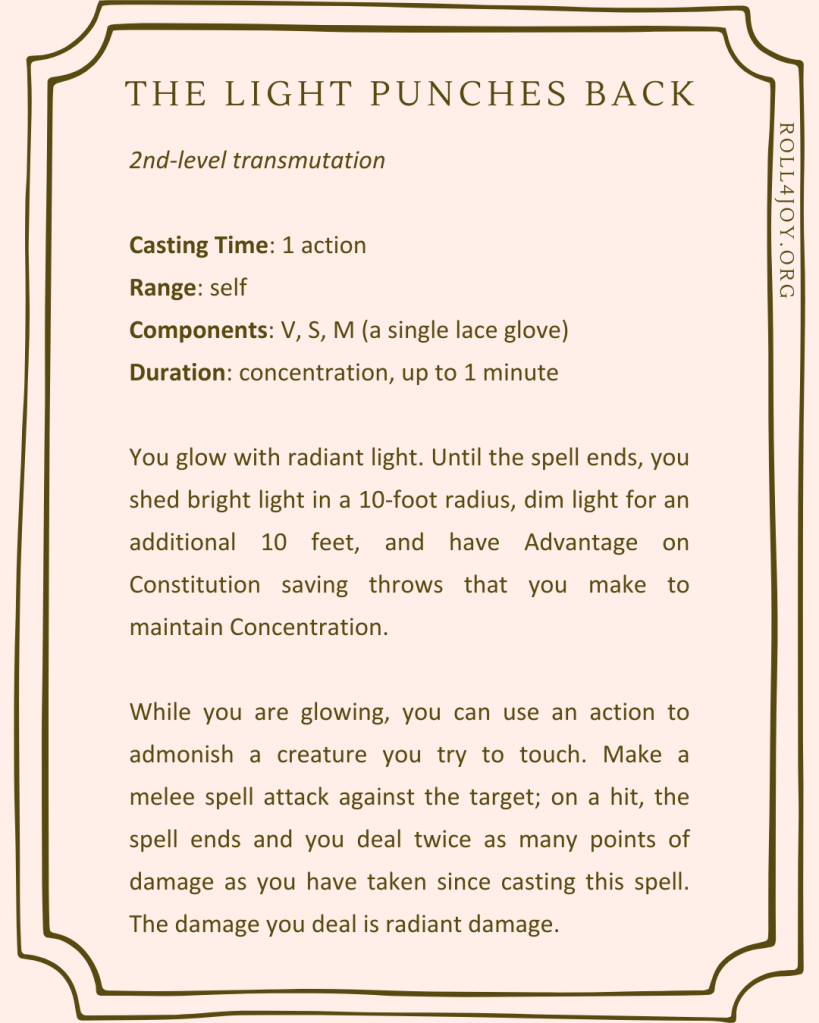
I channeled some of this energy into a homebrew spell I’ve named The Light Punches Back. The mechanic is this: you absorb damage, concentrate through the pain, and then release it outward — doubled — as radiant light. This way of moving through pain comes from my own life. My son has a rare genetic condition, and rather than sit with the grief alone after his diagnosis, I signed up to run a marathon. I did public advocacy. I took the pain and put it out into the world differently.
The light punches back.
This is not a callous theology. It’s not the idea that pain is secretly fine, that suffering is secretly good. It’s something more careful and nuanced than that. It’s the recognition that darkness is real, and that what we do in the darkness matters. That the worst rolls don’t have to be the end of the story. That resurrection is not the denial of the tomb but the answer to it.
So the next time the dice betray you… the next time you reach toward something good and watch it harden in your hands… take a breath. Look at what just happened. Honor what you tried. And then take the next step, asking what your story needs you to do next.
You did your best. The outcome was never entirely yours to carry. Carry on anyway.
This is part 3 of a four-part series drawn from Episode 6 of the Roll for Joycast, where Alex Smith (Role Play Paladin), Anthony (Battlemap Boss), and Rory (the DM Pastor) explored the art of improv and storytelling at the table. New episodes of the Joycast come out monthly — find the Roll for Joycast on YouTube or wherever you get your podcasts. If this post got your creative juices flowing, post a comment or send us a message! And if you’re feeling the itch to play in person, the Holy Rollers Retreat is coming in August 2026 — use the code JOYCAST for early bird pricing.



Leave a Reply