When I first started playing Dungeons & Dragons, I never imagined it would become a spiritual practice.
Like most people, I came to D&D for the escapism and the fun. I loved the regular social outlet, the storytelling, the improv, and just sitting around a table with friends imagining wild scenarios. But as I kept playing, I realized this game could be so much more.
In Episode 4 of the Roll for Joycast, titled Discernment & Dragons, we explored how tabletop roleplaying games like Dungeons & Dragons can become unlikely yet powerful tools for spiritual growth. It’s a conversation that’s been bubbling in my own life for a while now, and this episode finally let me dive into an applied spiritual direction project that’s had me excited for months.
But let me back up a little.
Over the last year or so, I’ve gone through a major vocational transition. I stepped away from a long-term call as a lead pastor and into a brand-new ministry role focused on innovation and engagement. It was the right move and it came with a deep sense of call, but like most transitions, it also came with questions, loss, longing, and uncertainty.
During this season of in-between, I found myself turning not just to prayer or scripture (though those were there too), but to play. I kept asking myself, “Can I play my way through this?”
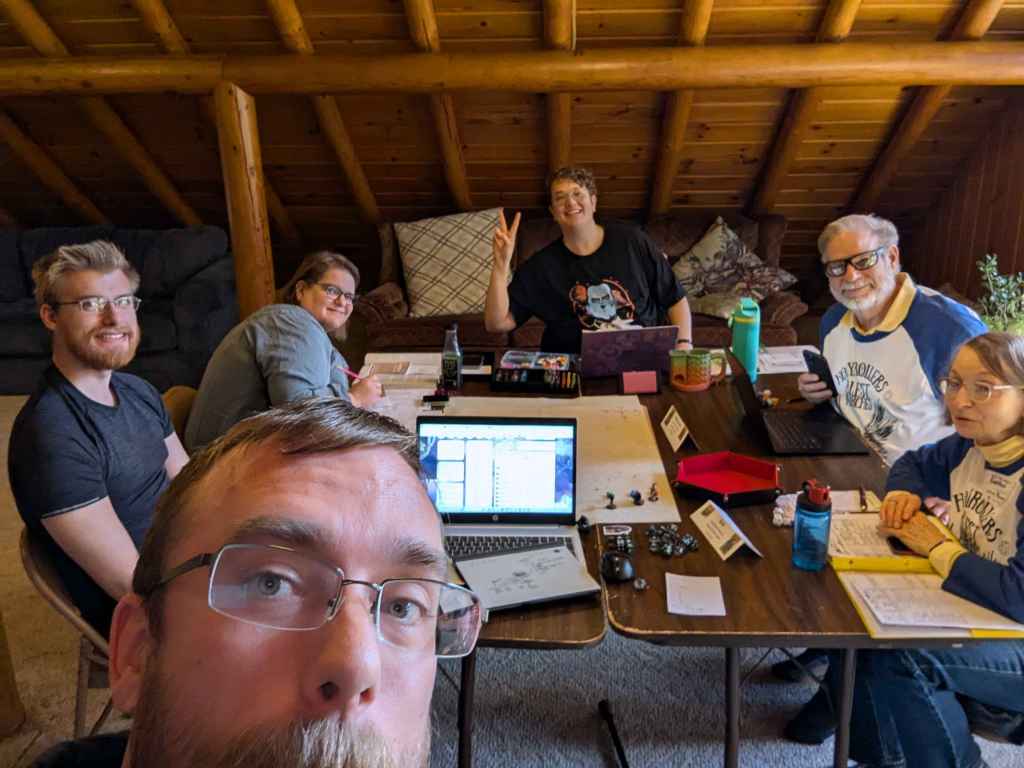
As a part of trying to answer that question, I started leading a D&D-based discernment group as part of my doctoral work in spiritual direction. Each week, I gathered with a group of people in the midst of their own periods of intense discernment, some of them were seasoned players, some were pretty new to D&D. We created characters, told stories, made decisions in the face of fictional danger, and reflected on what it all meant.
Here’s the thing that we discovered together: roleplaying gives you a unique window into the soul.
There’s something incredibly revealing about what we choose to do when the stakes are pretend—but the emotions are real. When your character, standing at the crossroads in another world, has to decide whether to trust a stranger, stand up to a tyrant, or flee into the darkness… that moment says something. Maybe not everything, but something important. About who we are. About what we value. About where we are in our own journey of faith, calling, and identity.
In the podcast, we talked about how character creation itself can be a spiritual practice. When someone builds a character – whether it’s a warlock with a dark past, a paladin who doubts the gods, or a bard who’s desperate to be heard – they’re not just inventing a fantasy. They’re exploring part of themselves. In our discernment games we asked each other: What parts of this character are you playing out from your own story? And what parts are you trying on for the first time?
That “trying on” is key. D&D gives people space to experiment with courage, kindness, conviction, and risk. You get to be braver, bolder, or more compassionate than you may feel capable of in real life. You get to fail and grow. You get to narrate your mistakes and move forward. It’s holy practice.
There’s also something deeply communal about this kind of play. A D&D campaign is built on mutual trust, listening, and improvisation. You literally cannot do it alone. The story unfolds because people bring their ideas and gifts to the table. They make space for each other to shine. Isn’t that also what the Church is called to be? A place where we imagine together. Where we bear witness to one another’s stories. Where we discern, in community, what the Spirit is doing among us?
In that way, the Roll for Joycast isn’t just a fun side project. It’s become a space to reflect theologically and playfully on the kind of faith community I believe we’re being called to build – one where curiosity and creativity are spiritual virtues, and where sacred play can make space for sacred truth.
Of course, I’m not saying you need a d20 and a +1 sword to follow Jesus.
But I do think D&D and similar games can help us ask spiritual questions in new ways:
- What do I do when I don’t know the right path?
- Who am I becoming through my choices?
- What am I afraid of – and what do I truly desire?
- What gifts have I been given, and how do I use them well?
Those are questions at the heart of Christian discernment. And when we ask them through the lens of an imagined world, something powerful happens: our defenses drop, and our imagination wakes up.
In the episode, Trin shared that one of the most powerful moments in her play came not during a battle or a dramatic scene, but during a planning session as the characters interacted. As players began to speak and act vulnerably in character, they started to reveal real truths about themselves, they were allowed the space to more deeply become who they really are. Moments like that, imaginary as they are, create real spiritual movement.
So why not play?
Why not open our hearts and minds to the ways God might speak through creativity, story, and surprise?
My hope, through the podcast, through the discernment games I lead, and through events like our upcoming retreat, is to invite more people into this intersection of sacred play and spiritual practice. Whether you’re a lifelong gamer or someone who’s never touched a d20, there’s space at the table. You don’t need to be a “religious expert” or a “theater kid” or even particularly imaginative. You just need to be willing to show up, stay curious, and trust that the Spirit speaks in more ways than we expect.
Sometimes, even through dragons.
So if you haven’t already, I invite you to give Episode 4 a listen. And if the idea of a D&D discernment group sparks something in you—reach out. Let’s talk. Let’s imagine. Let’s play.
You never know what you might discover.

 Roll for Joy
Leave a comment